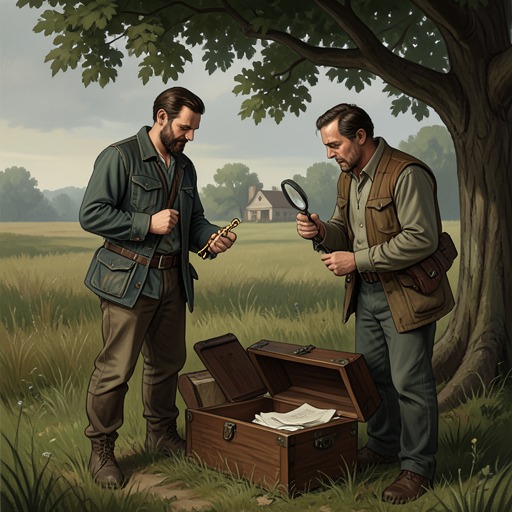
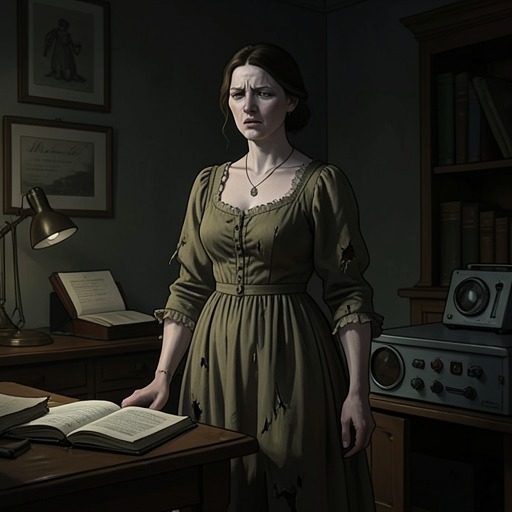
Event 1
Hadler family murders
The [Hadler family murders](entity:event-recall-event-hadler-family-murders-70b4b620cc5a) are the central crime of *The Dry*: Luke, Karen, and their young son Billy are killed, while their infant daughter survives. The scene initially appears to confirm a devastating account of family violence, but the crime’s details—including ammunition that does not match Luke’s usual supply—make that account increasingly doubtful. The contrast between the apparent explanation and the evidence turns the deaths into the investigation’s governing mystery.
## Setting and Discovery
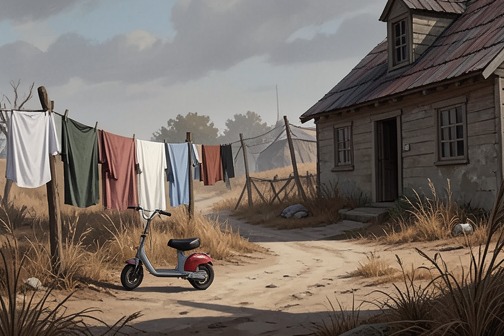
The murders occur during [Kiewarra](entity:location-recall-location-kiewarra-d70a356463f5)’s prolonged drought, when farmers have endured a second year of failed hopes for rain. The farm’s exposure and isolation shape the first account of the aftermath: laundry hangs dry and stiff, a child’s scooter is left on the path, and no one within a kilometer responds when the baby begins crying inside the house. The quiet surroundings do not soften the scene; they underline how completely the family has been cut off from help.
The bodies are found in two parts of the property. Luke is in a clearing, while Karen and Billy are inside the farmhouse. The baby’s cries establish that an infant has survived, but the sound goes unanswered in the immediate aftermath. The arrangement of the scene encourages the assumption that Luke killed his family and then himself, an interpretation repeated by townspeople and initially supported by the discovery of his licensed shotgun beside him.
## Evidence and Reconstruction
The first break in the apparent explanation comes from the ammunition. [Greg Raco](entity:character-recall-character-greg-raco-ea16a0662a23) finds that the three cartridges used in the killings were Remington, whereas the ammunition he can locate on the property is Winchester; [Luke Hadler](entity:character-recall-character-luke-hadler-b89ca0de4acf) had used a different brand for years. The discrepancy makes the shotgun beside Luke insufficient to settle who fired it, and turns what seemed to be a straightforward murder-suicide into a question of staging.
Security footage adds a timed trace of Luke’s silver pickup. [Aaron Falk](entity:character-recall-character-aaron-falk-1fab38f741e2) and Raco watch it appear, remain on the recording during the interval when the gunshots are heard, and leave three minutes and forty-seven seconds after first arriving. No other vehicle comes or goes before the courier arrives thirty-five minutes later. The footage does not show the person responsible, but it fixes Luke’s truck at the farm during the killings and gives the investigation a sequence to test against the initial account.
The later reconstruction identifies [Scott Whitlam](entity:character-recall-character-scott-whitlam-1f46d9c23c8d) as the killer. After Luke encounters him, Whitlam knocks Luke unconscious, puts him in the pickup, and loads Luke’s shotgun with [Remington ammunition](entity:object-recall-object-remington-80c21de8adb7) taken from the school. He drives to the Hadler farmhouse, where Karen opens the door and Whitlam shoots her. Billy is also present, despite Whitlam’s expectation that he would be elsewhere; Whitlam finds him hiding in the bedroom and shoots him. The baby is in the nursery and survives. Whitlam then drives Luke’s body to a clearing, arranges it with the shotgun to suggest suicide, and leaves the scene. The mismatched cartridges and the pickup’s movements are thus not incidental irregularities: they point away from Luke and toward a staged account of the family’s deaths.
## Public Judgment and the Personal Mystery
The apparent murder-suicide quickly becomes a public verdict. [Sandra Whitlam](entity:character-recall-character-sandra-whitlam-e1424e7a9e40) speaks of Luke as the man who killed his wife and child, a certainty that shows how readily the town’s first explanation hardens into blame. Yet for Aaron Falk, the conclusion remains difficult to imagine: even after trying repeatedly, he cannot make the image of Luke pursuing Billy fully come into focus.
The difficulty is sharpened by Falk’s memories of the child and his father. Billy’s paintings at the farmhouse show cheerful scenes—airplanes carrying smiling people and many variations on cars—details that make Falk’s knowledge of the boy’s fate impossible to hold at a distance. His recollection then turns to his last meeting with Luke, five years earlier in [Melbourne](entity:location-recall-location-melbourne-9115df2f60d3). Luke still seemed energetic, but Falk recognizes that by then he had barely known his old friend. The murders therefore leave him confronting both the question of who killed the family and the uncomfortable distance that had grown between the two men before Luke’s death.
## Staging and the Reversal of the Initial Account
The reconstruction also explains how the apparent murder-suicide was manufactured. When Luke encountered Scott Whitlam, Whitlam attacked him with a sock packed with stones, then used gloves taken from the school science lab to move him into Luke’s pickup. Luke’s shotgun was unloaded; Whitlam loaded it with Remington ammunition from the school before driving to the farmhouse. These details connect the ammunition discrepancy not just to the weapon, but to Whitlam’s access to the school and his deliberate preparation of the scene.
After the killings, Whitlam returned Luke to the clearing and arranged the shotgun to make his death appear self-inflicted. The tarpaulin and Whitlam’s bicycle helped conceal traces left in the pickup during the journey; he then left by bicycle. What first seemed to be a single, self-contained act was therefore a sequence involving two locations, a borrowed vehicle, and evidence deliberately made to implicate Luke. The investigation’s central reversal rests on that difference: the scene looked like an explanation, but its details recorded the labor of staging one.
Event 2
Ellie Deacon's death by drowning
[Ellie Deacon](entity:character-recall-character-ellie-deacon-d4567f5d3aa0)’s death by drowning is the concealed crime at the heart of the old accusation against Falk: the river did not take Ellie by chance, and the name found in her pocket did not tell the whole story. Her body was discovered after she had gone missing, and the official medical finding was drowning. Only later does the narrative disclose the plan that brought Ellie to the river, her father [Mal Deacon](entity:character-recall-character-mal-deacon-b8215c37bbb4)’s pursuit, and the way he and [Grant Dow](entity:character-recall-character-grant-dow-23b74370cf37) used a genuine note to make the evidence point elsewhere.
## Discovery and the First Account
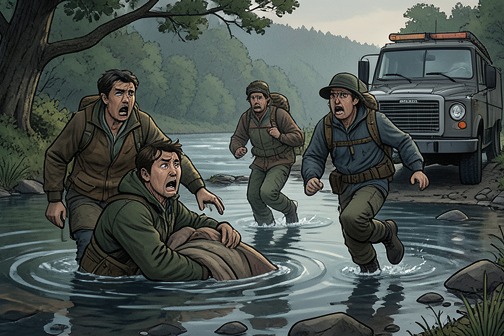
The discovery begins with three hikers struggling along a track beside the [Kiewarra River](entity:location-recall-location-kiewarra-river-cd73ef59947e). Hot, bored, and delayed by the difficult walk, they are bickering and paying little attention to their surroundings. When the leader stops and points toward the murky water, the group sees something that changes their walk into an emergency. They bring Ellie’s body to the bank; one runs for help, while the others wait for emergency workers. The scene reaches the reader through the hikers’ shock rather than through any prior explanation of how Ellie came to be there.
They can identify her from a photograph that had appeared in the newspaper for three days: Ellie Deacon, sixteen, missing since Friday night. She had failed to return home, but her father initially gave her time to come back, interpreting her absence as a possible teenage impulse. When she was still gone on Saturday, he reported her missing. The interval between her disappearance and the alarm becomes part of the first account: people knew she was absent before they knew what had happened to her.
The doctor examining Ellie’s body reports drowning and estimates that she had been in the river for several days, most likely since Friday. Some marks could have resulted from debris moving through the water, leaving the first official description compatible with an accidental death. The account establishes how the death was classified, not how it occurred. That gap matters: the report gives the town and the reader an apparent explanation while the circumstances that placed Ellie in the river remain hidden.
## Ellie’s Plan to Leave
The later revelation changes the meaning of Ellie’s disappearance. She had saved money, packed a bag quietly, and hidden it by the river where she believed it would remain undiscovered until she was ready to go. She had also booked a room at an anonymous motel three towns away. The plan was specific and practical: leave home, reach a place at a distance, and preserve one chance to get away. Her absence was not simply a refusal to return or a temporary teenage rebellion.
Ellie wanted to tell [Aaron Falk](entity:character-recall-character-aaron-falk-1fab38f741e2), but fear stopped her. She believed that Mal’s retaliation for a real or imagined slight could be swift, and had watched him threaten people and carry out those threats. In a community struggling to survive, she saw no one in [Kiewarra](entity:location-recall-location-kiewarra-d70a356463f5) she could rely on to stand up to him. The hidden bag and booked room therefore express both intention and isolation: she had prepared a route out, but did not believe she could safely announce it or ask the town for protection.
The name Falk appears in two connected but distinct parts of her plan. When asked for the motel reservation name, Ellie automatically gave the name that made her feel safe. She also wrote Falk’s name and her chosen date on a piece of paper, folded it into her jeans pocket, and treated it as a reminder not to turn back. Her diary records that she feared Mal would kill her if he discovered what she was planning. The note was real, but its presence did not mean Falk had caused her death.
## Pursuit and Death
Mal realizes that Ellie may be leaving after noticing that her backpack is missing from its usual place and that there are gaps among her clothes. He recognizes the signs of secrecy and connects them with an earlier departure by Ellie’s mother. He then takes Grant in his truck and heads toward the river. When Mal sees Ellie near an oddly shaped tree, he gets out and runs after her, leaving Grant behind. The account thus turns the river from the place where Ellie had hidden her escape bag into the place where her attempt to leave is stopped.
Mal catches Ellie at the riverbank and, after striking her, forces her into the water and holds her there until she dies. The narration establishes deliberate killing rather than accident: he has pursued her because he will not let her leave, and he continues to hold her under despite her struggle. The difference between the doctor’s initial finding and the later account is decisive. Drowning remains the physical cause of death, but the circumstances are recast as an intentional act by her father, not an unexplained disappearance ending in an accidental fall or exposure to the river.
Afterward, Mal and Grant search the bank for stones to weigh Ellie’s body down. Mal promises Grant the farm during the search, tying the concealment of the death to a promise about inheritance. Grant finds the note bearing Falk’s name and suggests leaving it in Ellie’s room as a useful item. The narrative does not make the note a fabrication: Ellie had written it herself as part of her plan. Its deceptive force comes from where it is placed and how it can be read, detached from the fear and escape plan that gave it its original meaning. They search until dark but fail to find the backpack, the concealed evidence of the future Ellie had arranged for herself.
## The False Trail and the Delayed Truth
The police search Ellie’s bedroom for two hours and find the single-page note folded into the pocket of her jeans. It gives her disappearance date and the name Falk, written in her distinctive hand. The discovery supplies a compact, apparently personal clue, while omitting the motel booking, saved money, hidden bag, and danger she was trying to escape. Because the note is separated from its context, it helps turn Ellie’s trust in Falk into suspicion of him.
That suspicion persists in the later pub confrontation. Mal points to the town’s memory of what Falk supposedly did to his daughter, and Grant invokes [Luke Hadler](entity:character-recall-character-luke-hadler-b89ca0de4acf) as someone no longer able to contradict Falk’s account. When Mal demands an explanation for the note, Falk says nothing. His silence is not proof of responsibility; the note has revived a story whose most important facts remain concealed. The event’s delayed disclosure makes the reader revisit both the medical account and the accusations: what first looked like a drowning accompanied by a suspicious name is revealed as a killing, followed by a deliberate effort to leave suspicion elsewhere.
The death also exposes the cost of Kiewarra’s fear of Mal. Ellie had a destination and a means of leaving, but she did not believe there was anyone in town she could count on for help. The narrative places her private preparations beside the community’s public silence, then shows how the same river that concealed her bag became the scene of her death. Her note survives, but in the wrong setting it speaks falsely for her: its meaning as a talisman of escape is obscured, while its appearance as evidence against Falk endures.
Event 3
The fabricated alibi in the Ellie Deacon case
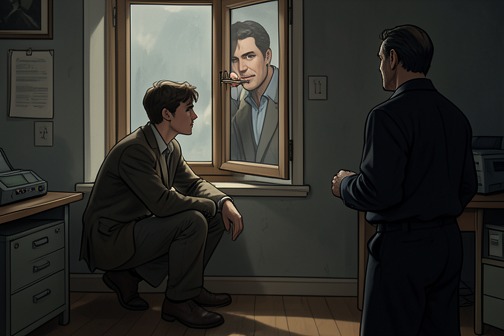
[The fabricated alibi in the Ellie Deacon case](entity:event-recall-event-b6cfe2d00cb9) began as a story [Luke Hadler](entity:character-recall-character-luke-hadler-b89ca0de4acf) gave a frightened sixteen-year-old [Aaron Falk](entity:character-recall-character-aaron-falk-1fab38f741e2) to repeat: that the two boys had spent the evening shooting rabbits in fields off Cooran Road. Its careful details made the account sound ordinary, but its central claim was false. Years later, Falk told [Greg Raco](entity:character-recall-character-greg-raco-ea16a0662a23) that he had not been with Luke when Ellie died, reopening the question of what the lie concealed and who knew it was a lie.
## Rumors and the Approach at the Window
The remembered scene begins with rumors spreading through the town. Sixteen and scared, Falk has shut himself in his bedroom, overwhelmed by thoughts, when a tap at the window brings Luke’s face into view in the evening gloom. Luke tells him that people are talking and asks what he was really doing after school on Friday. The urgency of the visit comes not from a formal accusation but from the prospect that others may already be questioning Falk’s account.
Falk says he had been fishing upriver, miles away. He insists that he was alone, and his legs feel too weak to hold him as he crouches by the window. Luke asks whether anyone, including the police, has questioned him, then presses the crucial point: whether Falk met anyone or was seen. Falk answers that he was on his own. The exchange establishes that Luke is not helping him recall a shared evening; he is responding to the danger created by the absence of a witness to Falk’s stated whereabouts.
## A Story Made to Sound Ordinary
Luke supplies an alternative account in practical, repeatable pieces. If anyone asks, Falk is to say they were shooting rabbits together in the back fields. When Falk specifies that the invented outing must be nowhere near the river, Luke fixes the location more precisely: the fields off Cooran Road. They were there all evening, Luke says, mucking around as usual, and they hit two rabbits. The location, duration, familiar activity, and number of rabbits give the lie the texture of a mundane shared memory.
Those details also limit the story’s possible variation. Luke corrects the location away from the river and settles on two rabbits rather than leaving the number open. Falk agrees to the number, and Luke makes him repeat the account: “Luke and I were shooting rabbits together.” At Luke’s prompting, Falk practices again, this time naming Luke Hadler and the Cooran Road fields. Luke tells him to say it until it sounds normal and not to get it wrong. The scene thus shows the alibi being constructed and drilled, rather than a spontaneous agreement about what had happened.
## The Lie Reopened
Years later, Falk brings the deception into the present by telling Raco that he should have disclosed it sooner. When Raco asks whether Falk had anything to do with the girl’s death, Falk denies involvement but makes a separate admission: he was not with Luke when it happened, despite what their story claimed. The distinction matters. Falk denies causing Ellie’s death, while acknowledging that the account he and Luke presented about their whereabouts was false.
Asked where Luke actually was, Falk says he does not know. He also tells Raco that he did ask Luke, but Luke always insisted on sticking to their story, even when only the two of them were together. Luke’s stated reason was that consistency was safer. Falk had been grateful and believed Luke was doing it for his benefit; that recollection reports Falk’s understanding at the time, not a confirmed explanation of Luke’s own purpose. The conversation reveals both the durable force of the lie and the limit of what Falk learned from the friend who authored it.
## Who Knew, and What the Alibi Changes
Falk says that [Mal Deacon](entity:character-recall-character-mal-deacon-b8215c37bbb4) and some others suspected the account was false, although he had thought no one knew for certain. He then revises that understanding: [Gerry Hadler](entity:character-recall-character-gerry-hadler-f8fa1b2e4faf) had known all along, and Falk is no longer sure Gerry was the only one. The alibi therefore did more than give the boys a common answer. Its apparent privacy was mistaken; suspicion and knowledge existed beyond the two people who rehearsed it, even if Falk did not know the full extent at the time.
The contrast between the boys’ practiced certainty and Falk’s later uncertainty gives the episode its continuing significance. In the bedroom, the story is made to sound normal through repetition; in the later conversation, its neat account breaks apart into what Falk cannot say: where Luke was, who else knew, and whether the truth had remained hidden from anyone at all. The alibi binds Falk to Luke through a shared falsehood, but it cannot supply the missing facts about the evening Ellie died.
Event 4
Ellie Deacon's drowning
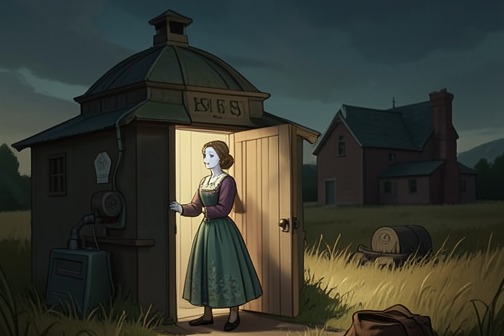
[Ellie Deacon's drowning](entity:event-recall-event-5029f07b1b6d) remains an unresolved death whose aftermath is bound up with remembered distress, a possible witness, and years of fear. The evidence offered about the days around her death does not identify who was responsible or establish exactly what happened; instead, it shows how the recovery of her body left a question hanging over [Luke Hadler](entity:character-recall-character-luke-hadler-b89ca0de4acf) and the people who feared that someone else might know more.
## Background and Warning Signs
Years before Ellie’s body was found, when she and the other children were about eleven, [Barb Hadler](entity:character-recall-character-barb-hadler-809d5bcdca6f) remembered Ellie as forlorn, very thin, and not eating properly. Ellie’s mother had recently left, and Barb believed the girl was so troubled that she might make herself sick with worry. Barb went to [Mal Deacon](entity:character-recall-character-mal-deacon-b8215c37bbb4) to tell him that Ellie was not well and that he needed to act. He showed her the door before she could explain herself. Barb recalled suspecting that Mal was responsible for what followed, though Gerry noted that they could never prove it.
A week after Barb confronted Mal, the Hadlers’ upper field died without warning. Tests showed that the soil acidity was wrong. Barb believed a neighboring application of chemicals could have caused the damage; the loss cost the family thousands, threatened their ability to stay afloat, and the field never properly recovered. The account links the episode to Barb’s concern for Ellie and her suspicion of Mal, but it does not establish that the field’s damage caused Ellie’s death.
## Discovery and the Unidentified Driver
Gerry recalled seeing a vehicle pass quickly, but he could not tell who was driving and said he had not been paying attention. He believed the driver might have seen Luke. Three days later, Ellie’s body was pulled from the river. Gerry’s account establishes the interval between the passing vehicle and the recovery, but leaves both the driver’s identity and what the driver might have witnessed unknown.
The possibility that someone had seen Luke became a source of prolonged fear for Gerry. He said that for twenty years he had worried the driver might emerge and tell the police that Luke had been there that day. His fear turns an indistinct sighting into a lasting pressure: the witness is never identified in this recollection, yet the possibility of testimony remains potent because it could unsettle the story surrounding Luke’s presence.
## Public Grief and the Unsettled Grave
Ellie’s photograph appeared in newspapers for days after her death, and some shops displayed it as an improvised poster while collecting money for her funeral expenses. The public image and the practical appeal for help show how widely her death registered in the town, even as the remembered accounts leave its circumstances unresolved.
Years later, [Aaron Falk](entity:character-recall-character-aaron-falk-1fab38f741e2) searched [Kiewarra cemetery](entity:location-recall-location-kiewarra-b9ccbfec1c3a) for Ellie’s grave. He had seen it once, at her funeral, before leaving [Kiewarra](entity:location-recall-location-kiewarra-d70a356463f5) for good; this time he found a small, anonymous stone among more ornate memorials, overgrown with yellow grass. Dead stalks wrapped in torn cellophane lay beneath the headstone. As Falk wiped grime from the engraved name, Mal appeared behind him and warned him not to touch it. The neglected grave and Mal’s sudden intervention bring the old death into the present without resolving it: Ellie remains the subject of other people’s fear, suspicion, and guarded memories.
Event 5
The false alibi for the night Ellie died
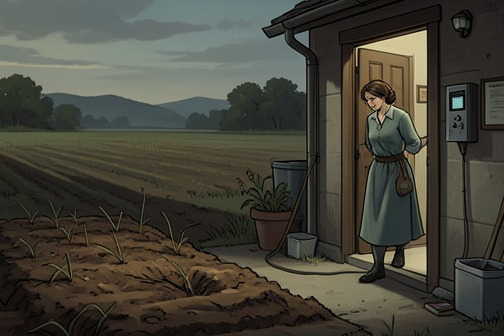
[The false alibi for the night Ellie died](entity:event-recall-event-a7df9b469773) was the story [Aaron Falk](entity:character-recall-character-aaron-falk-1fab38f741e2) and [Luke Hadler](entity:character-recall-character-luke-hadler-b89ca0de4acf) gave about being together in the fields, hunting rabbits, when [Ellie Deacon](entity:character-recall-character-ellie-deacon-d4567f5d3aa0) died. Its immediate purpose was to place Falk away from the circumstances surrounding her death, but its consequences outlasted the story’s apparent usefulness: Luke faced pressure to abandon it, [Gerry Hadler](entity:character-recall-character-gerry-hadler-f8fa1b2e4faf) recognized that it was false, and the suspicion surrounding Ellie’s note followed Falk’s family out of [Kiewarra](entity:location-recall-location-kiewarra-d70a356463f5). The lie is revealed in fragments, through a friend’s account of Luke’s loyalty, a father’s memory of what he saw, and Falk’s eventual admission to his own father.
## The Shared Story and Its Cost
Falk and Luke maintained that they had been together on the day Ellie died, in the fields where their account placed them. The evidence identifies this as a rabbit-hunting alibi, but Gerry’s observations cast doubt on its details: he remembered Luke returning from the south, from the direction of the river, and said Luke had neither his shotgun nor the appearance of someone coming from the fields. Gerry’s recollection does not, by itself, establish where Luke had been or what had happened there. It does establish that the account given by the two young men did not fit what Luke’s father had seen.
The lie also became a test of loyalty. [Gretchen Schoner](entity:character-recall-character-gretchen-schoner-d9166c1b2b0a) told Falk that Luke had stood by him over Ellie’s death and endured substantial pressure from people in Kiewarra to change his story and implicate Falk. In [Gretchen](entity:character-recall-character-gretchen-d75341b2a605)’s understanding, Luke could have made things easier for himself by giving Falk up, but he did not. Her account makes plain that the alibi was not simply a private agreement: its continued use had a social cost for Luke, particularly after Falk had left town.
When Gretchen raises this history, Falk tries to tell her the truth. He begins to acknowledge that both he and Luke had lied, but she interrupts him to emphasize how fortunate he had been to have Luke beside him. She believes the [Clyde police](entity:organization-recall-organization-clyde-b783860e3cfb) would otherwise have pinned Ellie’s death on Falk. The moment exposes a gap between the story Gretchen has carried and Falk’s knowledge of it: she sees Luke’s refusal to recant as loyalty, while Falk knows that the story itself was false. His interrupted attempt leaves the confession unfinished in that conversation.
## What Gerry Saw
Gerry later tells Falk that he knew the alibi was false and suspected that someone else might have known too. His certainty comes from a specific memory of Luke at a crossroads. Gerry was driving home with sparkling wine for Barb when he saw Luke ride across the road from the south. Luke was pedaling hard and did not look either way; Gerry’s immediate concern was that his son’s carelessness on an empty road might get him killed. The memory was ordinary at first, but, reconsidered against the alibi, its details acquired a different weight.
Luke had come from the direction of the river, not the fields where the boys said they had been. He was not carrying his shotgun. Gerry also remembered Luke wearing a gray, shiny button-down shirt that he usually saved for best, and having his hair slicked back. At the time, Gerry had treated the hairstyle as a change in fashion and the shirt as a sign that Luke was dressed unusually well. He later recalled that Luke’s hair was wet. Together, the direction of travel, missing shotgun, clothes, and wet hair made Gerry’s memory a concrete challenge to the hunting story, though the passage does not resolve exactly where Luke had been.
Falk attempts to answer Gerry by pointing out that there were farms and bike trails to the south, not only the river. Gerry rejects the bike-trail explanation, drawing on his own memory of Luke’s appearance. Their exchange sets competing accounts beside each other: Falk offers possible alternatives, while Gerry holds to the details he remembers. The scene does not turn Gerry’s inference into proof of Luke’s destination; its force lies in showing that the alibi could not erase what a close observer had noticed.
## Confession and Aftermath
The lie’s consequences reach beyond the old investigation when Falk’s father, [Erik Falk](entity:character-recall-character-erik-falk-b65611c572bf), confronts him about Ellie’s note. Erik says that friends and longtime acquaintances had asked him why Falk’s name was on the note and had crossed the street to avoid him. He presses his son to explain. Falk initially reacts with anger and shame, asking why the family is running if departure only makes them look guilty. Erik answers that the note is what makes them look guilty and asks directly whether Falk had really been with Luke.
Falk answers yes. Erik’s reaction is not relief: he opens his mouth, stops, and looks at his son as if seeing him anew. They drive the rest of the way in silence. The admission confirms the shared alibi to Erik, but it does not resolve the public suspicion attached to the note or reverse the family’s departure from Kiewarra. In this remembered confrontation, the lie becomes a burden Falk can no longer separate from the cost his father has borne.
## Narrative Significance
The alibi is disclosed through delayed, partial knowledge rather than a single explanatory scene. Gretchen describes Luke’s steadfastness without knowing that Falk is preparing to admit the truth; Gerry’s recollection supplies discrepancies without identifying Luke’s actual destination; and Falk’s answer to Erik confirms the central fact without explaining every circumstance behind the lie. These distinct accounts keep the difference between what is known and what is inferred visible.
The story also makes loyalty morally complicated. Luke’s refusal to change his account protected Falk, but it exposed Luke to pressure and left Gerry carrying a memory that contradicted what his son had said. Falk’s eventual confirmation does not make the earlier loyalty disappear; it reveals the false account on which it rested. The alibi therefore functions both as protection and as concealment, joining Ellie’s unresolved death to the later estrangement between Falk and his father and to the suspicion that follows the family away from town.
Event 6
The lookout cliff-prank incident
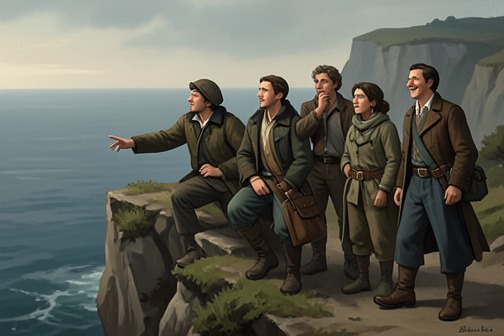
[The lookout cliff-prank incident](entity:event-recall-event-6c85366f8c45) is the moment [Luke Hadler](entity:character-recall-character-luke-hadler-b89ca0de4acf)’s staged disappearance turns a night of fear into a lasting fracture among his friends. As [Aaron Falk](entity:character-recall-character-aaron-falk-1fab38f741e2) and [Gretchen Schoner](entity:character-recall-character-gretchen-schoner-d9166c1b2b0a) worry that Luke may have fallen from the unstable cliffs, [Ellie Deacon](entity:character-recall-character-ellie-deacon-d4567f5d3aa0) gives him a chance to end the alarm. His silence prolongs their uncertainty; his cheerful reappearance converts it into anger. The ensuing confrontation exposes a pattern Ellie recognizes in Luke’s behavior: he treats the people who care about him as participants in a game whose risks they have not agreed to take.
## The Search and the Unanswered Call
[Gretchen](entity:character-recall-character-gretchen-d75341b2a605) is already hysterical when the group reaches the lookout, her face flushed and her blond hair damp with sweat. She is drunker than Aaron first realized, and he too has been drinking. He repeatedly creeps toward the edge to look down and calls Luke’s name, nearly losing his footing three times. The danger is not merely imagined: the cliffs are notoriously unstable, and the group has been warned more than once to stay away. Aaron knows Luke is familiar with the area, but that knowledge cannot tell him whether Luke is safe. As the minutes pass, the possibility of a real fall becomes harder for Aaron to dismiss; thoughts of Luke’s parents, Gerry and Barb, make the stakes painfully concrete.
Ellie, by contrast, remains composed. She warns Aaron to keep back from the edge, then approaches it herself, places her boot toes at the brink, looks over, and steps away. Her gesture brings the scene’s physical danger into sharp focus without answering the question of where Luke is. Rather than continue searching blindly, she calls to him that the group is heading down, that everyone is frightened, and that this is his last chance to respond. The lookout gives no answer. Ellie then tells Luke that he has made his choice and hopes he is happy. Her words sound sad rather than angry: at this point, she still treats the silence as a decision with consequences, not as proof that the whole emergency has been staged.
## The Reveal and the Physical Confrontation
As the group rounds the corner at the bottom of the hill, Aaron sees Luke sitting on a rock, apparently in perfect health, grinning with a cigarette in one hand. The contrast is immediate: while Gretchen has been hysterical and Aaron has been calling into the drop, Luke has been able to wait for them. His laughter and casual greeting confirm that he is not injured. They do not, however, make the fear that preceded his appearance disappear. Aaron lunges at him.
Luke steps back as Aaron grabs his shoulders, and the two stumble to the ground. Luke’s cigarette rolls from his fingers; Ellie steps over and grinds it out, warning them about the sparks after the scare they have already caused. Her intervention joins the prank’s emotional harm to the literal danger of the setting: on a night spent near unstable cliffs, even the discarded cigarette becomes a possible threat. The scuffle does not settle the disagreement. Instead, Luke’s attempt to make light of what happened sharpens it. When he calls his friends boring, Aaron shoves him hard enough that Luke’s head strikes the ground. Ellie looks down at Luke with pity rather than simple anger, a response that shifts the argument from the immediate prank to what it reveals about him.
## Ellie’s Rebuke and the Group’s Fracture
Ellie challenges Luke for treating loyalty and caution as signs that his friends are dull. She tells him that he uses her, Aaron, and Gretchen, frightening people who care about him and playing them against one another, while regarding their alarm as part of a game. Her accusation gives the incident a meaning beyond a reckless stunt: the prank has forced the others to experience how little control they have over the danger Luke creates and how readily he can dismiss their distress afterward.
Luke later apologizes to Gretchen for frightening her and presents the episode as intended fun that went too far. His manner makes the apology seem insincere to Aaron, while Ellie’s earlier judgment remains unanswered. She tells Luke that he owes the others something. The exchange offers no reconciliation; an apology that minimizes the harm cannot restore the trust that the prank has spent. Luke’s easy dismissal and Ellie’s direct naming of the behavior stand in opposition: he treats the event as over once the joke is revealed, while she insists that its effect on the people involved still matters.
## Aftermath and Lasting Significance
The friends do not return to their earlier ease. None of them speaks about the argument again, but its presence persists. Ellie speaks to Luke only when necessary, using a polite yet distant tone. Aaron, embarrassed around Ellie and angry with Luke, withdraws somewhat from the group. Gretchen becomes the intermediary, while Luke acts as if nothing has changed. Each response registers the damage differently: distance, embarrassment, mediation, and denial replace the former closeness.
Aaron tells himself that the tension may pass, but he cannot be sure. The incident has exposed cracks deeper than he had understood, and he never learns whether the group would have repaired them: Ellie has only two weeks left to live. In retrospect, that short interval makes the prank’s unresolved aftermath especially stark. What begins with an unseen Luke and the possibility of a fatal fall ends not in relief alone, but in a damaged friendship whose members have recognized, without resolving, what the others’ behavior means. The event matters because the false alarm becomes a true test of trust—and because the group’s silence afterward cannot make the fracture disappear.
Event 7
The Falk family's departure from Kiewarra
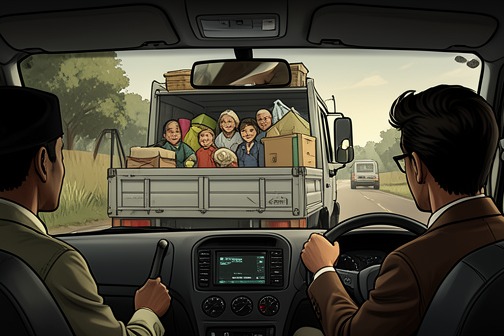
[The Falk family's departure from Kiewarra](entity:event-recall-event-0bf5286f6d82) is both a flight from a hostile town and a fracture between [Aaron Falk](entity:character-recall-character-aaron-falk-1fab38f741e2) and his father, Erik. [Mal Deacon](entity:character-recall-character-mal-deacon-b8215c37bbb4)’s white truck follows them out, but the sharper pressure comes from inside their own vehicle: Erik confronts Aaron over the note bearing his name and asks whether he was really with [Luke Hadler](entity:character-recall-character-luke-hadler-b89ca0de4acf). Aaron says yes. The family’s hurried escape thus carries two burdens at once—the threat of pursuit and the truth they have not been able to say aloud to each other.
## Departure Under Threat
The journey begins with the Falks already having left much of their life behind. Their household goods are piled in the back of Erik’s truck, clunking and shifting as he drives. Their farmhouse has been locked and secured as tightly as they can manage, and the sheep have been divided among neighbors willing to take them. Aaron cannot bring himself to ask whether those arrangements are temporary or permanent; the uncertainty makes the departure feel less like a planned move than a break whose duration no one can name.
Mal Deacon’s truck fills the rearview mirror for more than a hundred kilometers along the road out of [Kiewarra](entity:location-recall-location-kiewarra-d70a356463f5). Erik keeps both hands clenched on the wheel and watches the reflection. Once, near the beginning of the drive, he slows down to let Deacon pass, as if the journey could still be treated as an ordinary one. Deacon’s dirty white truck instead advances steadily and shunts the Falks’ rear bumper, jolting Aaron’s head backward. Erik does not slow again. The collision makes the threat physical, while the long pursuit turns the road away from town into an extension of the hostility they have left behind.
## A Question in the Car
After about an hour without seeing Deacon again, Erik brakes abruptly and pulls onto the empty roadside. He slams a hand against the steering wheel, then turns and grabs Aaron by the shirt, twisting the fabric and hauling his son toward him. Aaron has never known his father to raise a hand to him in anger. The gesture marks a sudden change in their relationship: the person driving him away from danger is also the person demanding an answer from him.
Erik asks whether Aaron did it. The question shocks Aaron and leaves him struggling to breathe before he can answer. He thinks of the possessions shifting behind them, his rushed good-bye to Luke and [Gretchen Schoner](entity:character-recall-character-gretchen-schoner-d9166c1b2b0a), and [Ellie Deacon](entity:character-recall-character-ellie-deacon-d4567f5d3aa0), whom he will never see again. Even as he feels anger and tries to wrench his father’s hand away, he keeps checking the rear window for Mal Deacon. The immediate danger outside the truck and the accusation inside it converge in the same moment.
Erik explains that people he has known for years have asked him about the note written by the dead girl. Some have crossed the street rather than face him. He tightens his grip and asks why Aaron’s name was on it. Aaron, now face-to-face with his father, answers with a question of his own: why was Erik’s name on it? The exchange exposes the note as more than a source of public suspicion. It has entered the family’s private life, dividing father and son over what each knows and what each has concealed.
## The Admission and Its Cost
Aaron asks why they are running, arguing that leaving makes them look guilty. Erik answers that the note is what makes them look guilty, then asks directly whether Aaron was really with Luke. Aaron meets his father’s eyes and says that he was. The admission does not settle the confrontation. Erik opens his mouth, closes it, and looks at his son as if he has never seen him before. He then turns back to the wheel and starts the engine.
They drive the rest of the way without exchanging a word. Aaron stares into the side mirror, burning with anger and shame, while the silence replaces the argument rather than resolving it. He is disappointed that Mal Deacon does not reappear. That reaction holds the danger of the road alongside the unresolved family rupture: Deacon’s absence removes the immediate pursuit, but it cannot restore the conversation between father and son.
## What the Departure Leaves Behind
The departure separates Aaron from the people and places that had shaped his life in Kiewarra. His good-bye to Luke and [Gretchen](entity:character-recall-character-gretchen-d75341b2a605) is rushed; Ellie is already someone he understands he will never see again. Behind the family, the farmhouse is secured, and their sheep are entrusted to neighbors. These practical preparations protect what they can, but they do not tell Aaron whether there will be a return.
The scene also makes the departure a lasting point of strain between Aaron and Erik. The town’s reaction to Ellie’s note has reached Erik through years-long friendships and everyday acts of avoidance, while Aaron’s confirmation about Luke leaves his father looking at him differently. Their silence for the remainder of the drive gives the escape no clean ending: the family gets farther from Kiewarra, but the suspicion that forced them to leave travels with them.
Event 8
Falk framed over Ellie's death and driven from Kiewarra
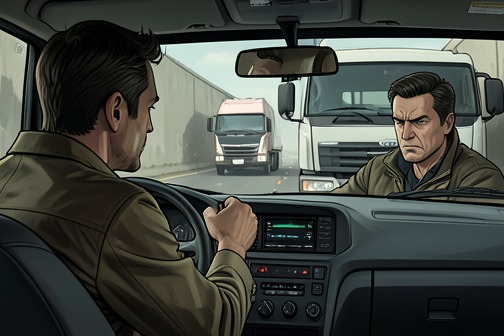
The framing of [Aaron Falk](entity:character-recall-character-aaron-falk-1fab38f741e2) over [Ellie Deacon](entity:character-recall-character-ellie-deacon-d4567f5d3aa0)’s death turned [Mal Deacon](entity:character-recall-character-mal-deacon-b8215c37bbb4)’s murder of his daughter into a false accusation against Falk, helping drive Falk and his father from [Kiewarra](entity:location-recall-location-kiewarra-d70a356463f5). Revealed through Mal’s recollection and Falk’s later account of the past, the episode links a staged clue to a long-lived injustice: the town’s suspicion did not end when Falk left, but became part of the history he carried back with him.
## Background and motive
More than twenty years after the events, Raco tells Falk that his view of Mal is colored by what Mal did to him. Falk does not dispute the old grievance. He describes Mal as a man who had held power over Kiewarra and used it to drive Falk and his father away. The framing therefore belongs to a larger pattern of local intimidation, not merely to the immediate aftermath of Ellie’s death.
Falk’s anger also affects how he interprets later events. He connects Mal and [Grant Dow](entity:character-recall-character-grant-dow-23b74370cf37) to the Hadler case, including the fact that [Karen Hadler](entity:character-recall-character-karen-hadler-f3a46a88e4c7) had written down Grant’s name shortly before she died. Falk insists that Mal is guilty of something beyond vandalism, but acknowledges that his personal history gives others reason to question his judgment. The old frame leaves him with both a grievance and a credibility problem: he believes he recognizes a pattern, while knowing that his hatred of Mal can be used to discount what he says.
## The false trail
Mal’s recollection reveals what happened after he drowned Ellie. As he and Grant searched the riverbank for stones to weigh her down, Mal had to promise the farm to his nephew. Grant had found the note bearing Falk’s name in Ellie’s pocket and suggested it could be useful to leave in her room. Their search continued until the light was gone, but they did not find Ellie’s backpack.
The note made Falk a plausible target by placing his name among Ellie’s belongings, while the promise of the farm bound Grant to Mal’s response to the killing. The recollection exposes the accusation as a deliberate use of evidence, rather than a mistaken inference about Falk’s relationship with Ellie. The missing backpack also marks a limit to their control: they searched for it, but did not recover it that night.
## Consequences and significance
Falk later describes the outcome plainly: Mal used his hold over the town to drive Falk and his father away. In the present-day conversation with Raco, the old harm resurfaces as Falk argues that Mal has left a trail of destruction and misery. Raco’s rebuke does not erase Falk’s account; it distinguishes the force of his suspicion from proof that Mal committed a new crime.
The episode thus gives Falk’s return to Kiewarra a history beyond the current investigation. The false trail helped separate him from his home and remains a source of anger that complicates his judgment in the Hadler case. Its disclosure also reverses the apparent meaning of the note: what could implicate Falk was, in Mal’s account, something Grant proposed using to implicate him. The frame’s lasting consequence is not only exile, but the difficulty of being believed after a lie has helped define a person’s past.
Event 9
Ellie catches Luke and Gretchen together by the river
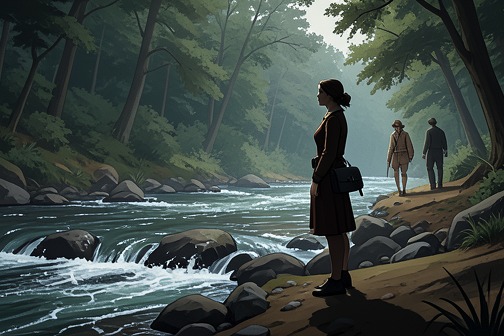
[Ellie catches Luke and Gretchen together by the river](entity:event-recall-event-046ebec591b4), a brief encounter that later becomes consequential not because the account records a confrontation, but because Luke and [Gretchen](entity:character-recall-character-gretchen-d75341b2a605) conceal that they saw her. In Gretchen’s recollection, the interruption is followed by uncertainty about Ellie’s whereabouts, a delayed understanding of the danger she faced, and a shared secret that helps shape the false alibi surrounding [Aaron Falk](entity:character-recall-character-aaron-falk-1fab38f741e2).
## The interruption at the river
Gretchen recalls being at the river with Luke when a sound among the trees drew her attention. The river was high, and its water moved noisily over rocks downstream; amid that background, she heard a dry snap in the trees, then another. She stiffened before realizing that the figure was Ellie. The account does not describe a conversation with Ellie or establish what Ellie understood about finding them there. It presents her arrival as the interruption itself: Gretchen and Luke are together, and Ellie has come upon them.
Gretchen’s immediate response is relief that the sound was only Ellie, followed by the suggestion that they leave. The brevity of this exchange matters to the later account. At the river, the encounter does not become a decisive conversation in which they ask Ellie what is wrong or learn why she is there. Instead, Luke and Gretchen depart without resolving what her presence means. The silence is initially compatible with an ordinary moment they can put behind them; after Ellie is missing, the same silence becomes a source of guilt.
## The search and the missed opportunity
The encounter acquires a different meaning when Gretchen hears that Ellie has not gone home. Gretchen says she returned to the river to check for her, expecting that Ellie might be staying there to avoid her father. She found no sign of her. That detail shows that Gretchen did respond to the news by looking, but the search did not reveal where Ellie was or what had happened to her.
Luke and Gretchen argued over whether they should say anything about having seen Ellie. Gretchen remembers that they were not yet seriously worried: Ellie had been keeping to herself, and Gretchen expected her to reappear when she was ready. This expectation helps explain their delay without removing its consequence. They had noticed something troubling enough to consider speaking up, but treated her withdrawal as a condition that might pass rather than an immediate emergency. Gretchen says she never imagined that Ellie would be in the water.
## Guilt and concealment
After Ellie’s drowning was reported, Gretchen could no longer regard the river encounter as a passing interruption. She wondered whether staying and speaking to Ellie might have changed what followed. She describes having thought that something was wrong, then turning away, and says that shame caused her to shut down. The recollection does not establish that a conversation would have prevented Ellie’s death; it establishes Gretchen’s enduring sense that she had failed to respond when she had an opportunity to do so.
Gretchen then made Luke promise that neither would tell anyone they had seen Ellie. She explains that she did not want others to know how badly they believed they had let Ellie down. Their silence therefore began as an attempt to hide their own perceived failure, not as a public account of what happened. It also removed a potentially relevant detail from the story others could form about Ellie’s last movements. The private burden and the investigative significance of the secret grew together.
## [The false alibi](entity:concept-recall-concept-the-false-alibi-1aa814b8d29c) and the event’s significance
The concealment became entangled with suspicion directed at Aaron Falk. Gretchen recalls that people began blaming him and that Luke became afraid of what would be said if their presence at the river were known. Luke devised an alibi in which he would say that he had been with Falk. As Gretchen recounts it, the plan was meant to help Falk and protect Luke and Gretchen, while also allowing Gretchen to avoid acknowledging that she had been there and had not spoken to Ellie.
The river encounter thus connects a small, uncertain decision to the larger false alibi. The sequence is specific: Ellie appears while Luke and Gretchen are together; later they search for her but find no trace; after learning she drowned, they conceal their sighting; when Falk becomes a target of blame, Luke’s account places himself with Falk. The lie does not erase Gretchen’s knowledge of the encounter. Her later testimony instead exposes how shame and fear helped convert an omission into a fabricated explanation.
As a recalled event, the scene is disclosed through Gretchen’s retrospective account rather than presented only as a self-contained moment at the river. That structure lets the reader reassess the encounter in stages: first as an interruption, then as a missed chance to speak, and finally as the origin of a secret with consequences for Falk. Its significance lies in this widening chain, while the limits of Gretchen’s knowledge remain intact: she can explain what she and Luke saw, why they stayed silent, and how the alibi was formed, but she cannot establish what would have happened if they had acted differently.
Event 10
Karen discovers the school grant embezzlement and confronts Whitlam
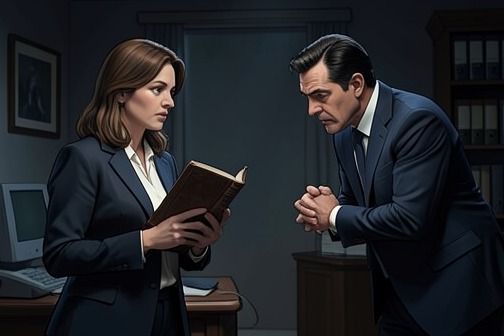
[Karen Hadler](entity:character-recall-character-karen-hadler-f3a46a88e4c7)’s visit to [Scott Whitlam](entity:character-recall-character-scott-whitlam-1f46d9c23c8d)’s office transforms a school-funding discrepancy into a confrontation with consequences far beyond the school. By handing Whitlam evidence that [Kiewarra Primary School](entity:location-recall-location-kiewarra-primary-sch-741cfd253619) received a grant, Karen gives him an opportunity to explain the apparent contradiction; his attempt to wave it away instead confirms her suspicion. The exchange exposes how the stolen money, a marked library receipt, and Whitlam’s fear of discovery converge in the investigation of the [Hadler family murders](entity:event-recall-event-hadler-family-murders-70b4b620cc5a).
## Background and the paper trail
Before the confrontation is reconstructed, Falk and [Greg Raco](entity:character-recall-character-greg-raco-ea16a0662a23) have been examining the Hadler family’s finances. The farm was struggling, but Falk’s review suggested that its position was not obviously worse than that of other local farms: the Hadlers had saved during better years, and their basic life-insurance policy was expected to cover the mortgage, not provide a substantial windfall. He had found no obvious warning signs such as large withdrawals, multiple accounts, or third-party debts. This makes the school grant a distinct line of inquiry rather than an explanation readily apparent in the family accounts.
The clue comes from Karen’s library receipt. She had borrowed a novel on February 19, four days before she was shot, and used the receipt as a bookmark. On its back she had written “Grant??” above a ten-digit number. Falk recognizes the number as his own. When he later shows the photocopy to Raco, Raco initially objects that Grant is not a name. Falk’s answer is to read the word financially: a grant can also be a bursary, fund, windfall, or gift. He has confirmed that Kiewarra Primary School, whose earlier application had been rejected, was awarded $50,000 by the [Crossley Educational Trust](entity:organization-recall-organization-crossley-educati-8e3e8964832c) that year. The receipt thus connects Karen’s private suspicion to the school’s newly awarded funding and to Falk, whom she may have intended to contact.
## The confrontation in Whitlam’s office
Karen closes the principal’s office door to shut out the ordinary Wednesday-afternoon bustle. Wearing a red-and-white apple-print dress, she sits straight-backed in the chair nearest Whitlam’s desk. She is worried and hesitant about raising the matter, but has decided that she cannot ignore it. She gives him a document bearing the Crossley Educational Trust letterhead and looks to him for reassurance, still allowing for an innocent explanation.
The document is a feedback survey automatically sent to successful grant recipients. Whitlam knows that Kiewarra Primary School had received the funding, but Karen’s presence with the trust’s letter makes clear that she has noticed something wrong. He later identifies this as the moment he mishandled the situation: rather than take time to read the form and respond plausibly, he tells her it is a mistake and that she should ignore it. The dismissal does not settle the question. Karen’s back stiffens and she looks down; as she leaves, Whitlam understands that her uncertainty has hardened into knowledge.
## What Karen discovers
The grant had been diverted through Whitlam’s manipulation of the payment details. He substituted his private account number while leaving the school’s account name on the form, relying on his belief that banks processed the numbers without checking whether the account name matched. The private account was one that [Sandra Whitlam](entity:character-recall-character-sandra-whitlam-e1424e7a9e40) did not know about. Whitlam had rationalized the scheme as temporary: he could assign the money to a vague school purpose later, after using it to meet immediate financial pressure.
That pressure was acute. Whitlam was in debt to people he feared, and he believed prison would leave him unable to repay them, placing his family at risk. After Karen walked into his office, he punched the wall discreetly until his knuckles were raw, then silently vomited into the wastepaper bin. These reactions reveal the gap between his outward dismissal and the panic it conceals. The $50,000 was not enough to clear what he owed, but he had treated it as time bought against demands he could not safely ignore.
Karen, meanwhile, had not arrived with certainty. She had examined the account records and traced errors to Whitlam, but had wanted him to explain the trust document in a way that made sense. After he dismissed it, she went directly to the girls’ toilets, locked herself in a stall, and leaned her forehead against the door before allowing herself to cry. She now accepted that the errors were evidence of his theft. Her movement from suspicion to conviction is the decisive change in the encounter: Whitlam’s words are meant to close the matter, but instead tell her that the discrepancy is real.
## Consequences and significance
Whitlam immediately understands the danger of Karen’s knowledge. He judges her cautious and likely to want complete certainty before acting, but fears that she will tell [Luke Hadler](entity:character-recall-character-luke-hadler-b89ca0de4acf), who, in his view, would respond more quickly. Falk later infers that Karen must have told Luke, or intended to, because the receipt included Falk’s number. The evidence does not make the receipt a complete explanation of what she planned; it establishes a paper trail from her discovery to the investigator and suggests that the school matter had entered the Hadler family’s private concerns.
The confrontation also marks the point at which Whitlam’s financial crime becomes an urgent threat to him. He waits alone at school for an answer to what he should do, then turns, as he often does under stress, to the slot machines at the pub. In their lights and sounds, he begins to imagine a solution. The scene therefore links a quiet administrative fraud to the escalating crisis surrounding Karen and Luke: a document intended to solicit feedback becomes the evidence that exposes the theft, while Whitlam’s failed attempt to reassure Karen makes concealment more pressing rather than less.
Event 11
Discovery of Ellie's hidden backpack and diary
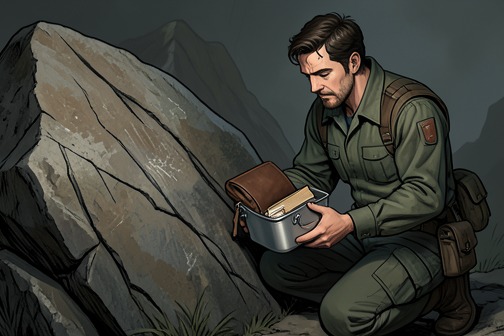
The discovery of Ellie’s hidden backpack and diary turns a private act of remembrance into a decisive return of evidence: at [Rock tree](entity:location-recall-location-rock-tree-cf9a1ae83686), [Aaron Falk](entity:character-recall-character-aaron-falk-1fab38f741e2) finds the concealed belongings that expose Ellie’s preparations to leave and, in the diary, the violence she had been living with. The objects have remained hidden for nearly twenty years; their recovery makes the town’s buried secrets tangible and brings Ellie’s experience into view just as Falk fears she may be forgotten amid the other victims and revelations.
## The return to Rock tree
Nearly April, as the summer heat began to ease, Falk walked through the fields toward Rock tree. The river was still gone after the drought, and he hoped it might one day return. He had come to remember Ellie at a place he knew she had loved. Kneeling beside the rock, he used a penknife to carve her initials, E. L. L., into the stone. The blade was blunt, and the work slow; pressure on his burned leg made it feel as if it were on fire.
That pain reminded Falk of the ancient lighter he had left in a crevice on an earlier visit. He wanted to retrieve it rather than leave a temptation for someone else to find. Reaching into the gap, he felt the metal of the lighter, then brushed against something soft but solid. The object was rough, pliable, fairly large, and clearly made by someone. He could not see into the crevice. For a moment he hesitated, but thoughts of Ellie, [Luke Hadler](entity:character-recall-character-luke-hadler-b89ca0de4acf), and [Scott Whitlam](entity:character-recall-character-scott-whitlam-1f46d9c23c8d), and of the people harmed by buried secrets, pushed him to reach farther.
Falk pulled hard. The object came free suddenly, and he fell backward as it landed on his chest. It was a purple backpack, coated in dirt and cobwebs. He recognized it immediately: Ellie was the only other person who knew about the opening in the rock. She had carried that knowledge with her into the river, leaving the bag hidden in a place Falk had returned to without knowing what it contained.
## What the backpack contained
Falk emptied the backpack onto the ground. Inside were jeans, two shirts, a jumper, a hat, underwear, and a small bag of makeup: practical personal belongings packed together, not a random collection of objects. A plastic wallet held identification for Sharna McDonald, a nineteen-year-old whose photograph looked somewhat like Ellie. The bag also contained a roll of money—tens and twenties, with an occasional fifty—saved little by little.
Together, the assumed identity, clothing, and money indicate that Ellie had prepared for a possible departure. The evidence does not establish where she meant to go or what she intended to do once she left, but it shows planning and persistence: she had assembled both a different identity and resources, then hidden them where they would be difficult to find. The backpack’s concealment in the rock’s secret crevice also connected its survival to the private knowledge Ellie and Falk had shared.
At the bottom lay a diary wrapped in a raincoat, protected when Ellie packed it nearly twenty years earlier. Its hard-backed cover was tattered and curled at the edges, but the writing remained legible. The diary changes the discovery from the recovery of abandoned belongings into the recovery of a record. The hidden bag suggested an intended escape; the diary gave evidence of the conditions from which Ellie may have wanted to get away.
## The diary and the violence it records
The first passage presented in the discovery recounts Ellie’s father hitting her when she was fourteen. He called her by her mother’s name before striking her shoulder. He was drunk, and the account connects his confusion to Ellie’s resemblance to her mother as she grew older. The mother’s photograph had already been removed from the mantelpiece; Ellie’s changing appearance, however, repeatedly brought that likeness back into the farmhouse.
The diary describes the violence as recurring rather than singular. After the first beating, there was a long interval, then another assault, and then more. Ellie tried watering down her father’s alcohol, but he noticed at his first sip, and she did not try again. At home she wore tops that showed her bruises. Her cousin [Grant Dow](entity:character-recall-character-grant-dow-23b74370cf37) responded by turning on the television and telling her not to provoke her father. Her schoolwork deteriorated, and teachers who noticed her inattention offered sharp comments rather than asking what was wrong.
These details give concrete force to Falk’s belief that Ellie had been a victim of the town’s secrets, fear, and lies. The diary records not only her father’s violence but also the failures around it: a relative who dismissed visible bruises and teachers who did not investigate a change in her schoolwork. The evidence does not show that every resident knew what was happening. It does show how signs of Ellie’s distress could be present without prompting anyone around her to ask why.
## Consequences and significance
The discovery begins with Falk’s attempt to recover a lighter, but the hidden object he finds is far more consequential. His decision to reach into the dark crevice follows his recognition that concealed truths have hurt people; the backpack then makes one of those truths physically present. The scene’s turn is from remembrance to evidence: the carved initials honor Ellie, while the belongings and diary restore parts of her story that had remained unseen.
For Falk, the find deepens the responsibility he already feels. Before uncovering the bag, he thinks Ellie needed someone and that he may have failed her; he also worries she could be forgotten in the aftermath of the Hadler family killings. The diary does not erase that guilt or supply every answer about Ellie’s life. It does, however, replace suspicion and silence with her own written account of repeated abuse and a material trace of her preparations to leave.
The objects also give the discovery its particular force. The money is carefully accumulated; the false identification carries Ellie’s likeness under another name; the diary is wrapped against damage; and the whole collection has survived in the secret opening at Rock tree. Each item marks a different form of preparation or concealment. Together, they reveal a young woman trying to preserve options and testimony in circumstances where the adults around her had failed to protect her. Retrieving them makes remembering Ellie an act of uncovering what the town had left hidden.
Event 12
Whitlam's bushfire threat and standoff
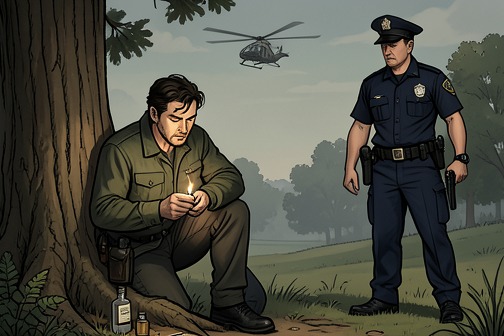
[Whitlam's bushfire threat and standoff](entity:event-recall-event-7a2974ab341f) transforms the search for [Scott Whitlam](entity:character-recall-character-scott-whitlam-1f46d9c23c8d) into a crisis with stakes beyond his arrest: in [Kiewarra's prolonged drought](entity:state-recall-state-kiewarra-s-prolonged-dr-9826dda9d61a), a flame in the bush could endanger the town and everyone searching for him. Falk and Raco confront Whitlam while he is concealed near a fallen log, and the attempt to bring him in becomes a race to prevent him from setting the landscape alight.
## The threat emerges
Falk and Raco find a hollow formed by a fallen log at the edge of a thicket. A hand is just visible there, prompting Raco to draw his police-issued pistol. Whitlam speaks from cover and tries to control the encounter, ordering Raco to put away the weapon and tell the other searchers to back off. Raco refuses. Whitlam then rises, visibly dirty and scratched, and points out that a police helicopter is circling overhead. The search has found him, but the presence of the aircraft does not end the danger: Whitlam is still holding something in his fist.
It is a lighter. Whitlam opens it and holds up the flame, then takes a small flask from his pocket and pours whiskey onto the ground around him. Falk understands the combination as an immediate fire threat, not merely a means of resisting arrest. After two years without decent rain, the dry bush and the alcohol-soaked ground could carry a fire toward the school and town through the connected vegetation. The searchers, dispersed among the trees, are also exposed. What began as a concealed fugitive’s standoff has become a threat to the lives of the people looking for him and to [Kiewarra](entity:location-recall-location-kiewarra-d70a356463f5) beyond the search area.
## A threat to the search party
The standoff sharpens when [Greg Raco](entity:character-recall-character-greg-raco-ea16a0662a23) makes clear that the people scattered through the bush are not a distant rescue force: they are potential victims, including his wife, Rita. He warns Scott Whitlam that the fire crews Whitlam imagines protecting his family are themselves out searching, and that his wife and daughter would also be endangered. Whitlam falters at the reminder, then insists he has already lost them and cannot save them. His despair turns outward into a threat against Kiewarra, which he declares can burn.
[Aaron Falk](entity:character-recall-character-aaron-falk-1fab38f741e2) and Greg Raco move at the moment Whitlam throws the lighter down. They charge together, spreading their jackets over him in an effort to smother the flame and restrain him. The intervention stops the confrontation from becoming an uncontrolled bushfire, but both officers are burned before rescuers pull them clear. The attempt to arrest Whitlam has become a costly act of protection: Falk and Raco risk themselves not only to stop him, but to keep the search party and the town from being caught in the fire.
## Aftermath and legal consequences
Falk and Raco survived, but both required hospital treatment. Falk woke in the burns unit at [Clyde Hospital](entity:location-recall-location-clyde-d0855d3abeea) and was told he would live; his hand, arm, and leg were bandaged, and he chose not to look again at the damage. Gerry and Barb visited with Charlotte, [McMurdo](entity:character-recall-character-mcmurdo-8cdc959ec020) brought him a beer, and Barnes spent long stretches at his bedside. [Gretchen](entity:character-recall-character-gretchen-d75341b2a605) did not visit, an absence Falk accepted without blame. Once he could get up, he spent much of his time beside Raco, who was sedated while doctors treated serious burns to his torso and back. Raco, too, was expected to live.
Afterward, Raco asked Falk whether, given what Kiewarra had done to him, he had been tempted to let the town burn. Falk answered with a joke about having left his house keys at the pub. The exchange sets their private, irreverent rapport against the real cost of the confrontation: the town was spared, but both men had put themselves in danger to prevent the fire.
Whitlam was transferred to the Alfred Hospital in [Melbourne](entity:location-recall-location-melbourne-9115df2f60d3) under police custody. He faced a series of charges, including the murders of [Luke Hadler](entity:character-recall-character-luke-hadler-b89ca0de4acf), [Karen Hadler](entity:character-recall-character-karen-hadler-f3a46a88e4c7), and [Billy Hadler](entity:character-recall-character-billy-hadler-2152e9ad8407). The fire had caught his hair, and he was described to Falk as almost unrecognizable; although he had survived, Falk expected prison to be difficult for him. When Falk was discharged, the Hadlers took him in as he recuperated. Barb fussed over him, Gerry made a point of shaking his hand, and they encouraged him to spend time with Charlotte, telling her that he had helped her father.
## The family’s account to Charlotte
The Hadlers’ account to Charlotte gave Falk’s role a meaning beyond solving the case: they portrayed him as having restored her father to her as a good man and loving husband. Luke was not literally brought back, but the story the family offered his daughter preserved a loving image of him and placed Falk’s help within that act of remembrance.